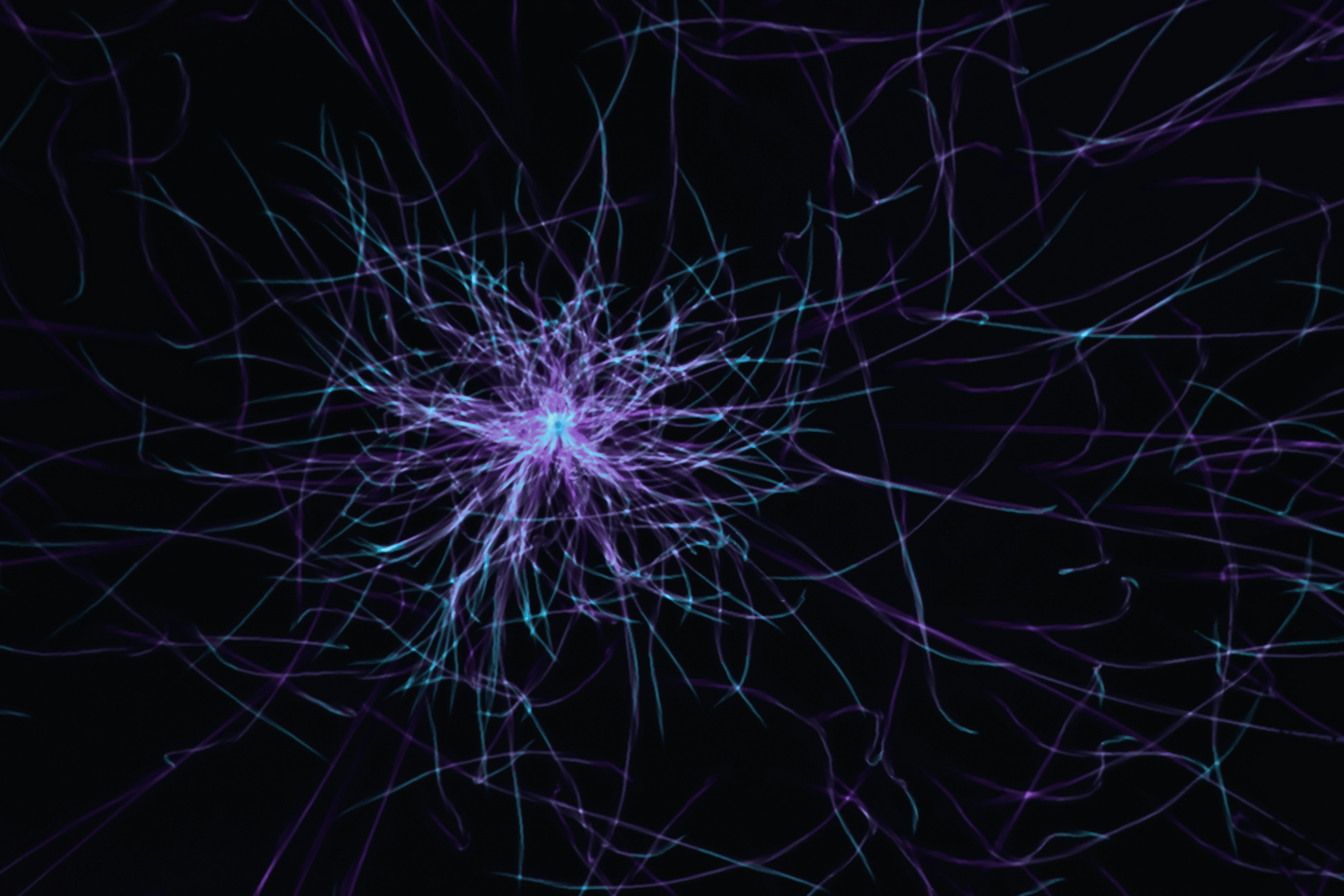
Knowledge does not live inside individual facts. It lives between them, in the connections.
Everything in the world exists in relation to other things. A person is someone’s child, someone’s parent, someone’s colleague. Remove the relationships and that person cannot be described. Every element of a hospital is the same. There is no equipment standing apart, no staff member standing apart, no patient standing apart. Everything calls out to something else as it moves.
The Chain from a Single Booking
Follow the moment a patient books a surgery.
The moment the booking is made, the operating room must be free at that time. The surgeon’s schedule must align. Assisting staff must be assigned. The required equipment must be in that room and must have been inspected. Consumable inventory must be sufficient, and if not, a purchase order must go out in advance. When the surgery is done, inventory decreases, settlement is recorded, and the patient’s next appointment is created.
One point — a booking — is connected to dozens of other points: space, staff, equipment, inventory, settlement. If the system does not know these connections, people must verify each one by hand and make call after call. The operating room schedule is checked separately. The inventory log is opened separately. Settlement is reconciled separately. Miss any one of them and the result is an incident or a loss.
Another Chain — Inventory
The same thing happens from a different direction. When one surgery is completed, the consumables used are subtracted from inventory. When inventory falls below a threshold, a signal must appear that a purchase order is needed. When the order goes out, a delivery schedule is set. When the delivery arrives, available inventory is replenished. Only then can the next surgery proceed without interruption.
When this chain is broken, the absence of consumables is discovered on the day of surgery itself. The most critical moment is when the most basic thing is missing. In a system that knows its connections, this does not happen. A change at one end of the chain reaches the other end automatically.
Drawing Relations as a Map
Drawing knowledge as “connections between points” is what a map of relations means. What something belongs to, what it requires, what it leads to — these are drawn as lines.
The first power of this approach is that duplication disappears. Write once that “surgery is accompanied by anesthesia preparation,” and every surgery inherits that connection. No need to rewrite it for each procedure. Add a new procedure and once it is placed under “surgery,” the necessary connections follow automatically. Do the work once, and the structure handles the rest.
The second power is visibility. People cannot solve complex problems in their heads alone. When drawn as a map, paths become visible. Where something is blocked, what caused something to stop — these become clear at a glance. Why a particular patient waited so long, which piece of equipment was unavailable due to which schedule — all of it becomes visible.
The Map Answers Questions
The greatest power a map of relations holds is the ability to answer the questions people ask.
“Is the equipment needed for this patient’s next surgery available right now?” To answer this, start from the patient, follow to the booking, from the booking to the procedure, from the procedure to the required equipment, from the equipment to its current status. When the connections are drawn, the system follows this path itself and returns an answer. The work a person used to do by opening screen after screen, the map does instead.
This is the difference from simple search. Search only lists records containing the word “equipment.” A map of relations points to exactly the equipment needed for this patient, for this procedure, right now — because it can follow the connections. The more complex the question, the wider the gap between the search that lists and the map that follows the path.
A Living Map
One of Keynoty’s screens shows the hospital as a living map like this.
Not a simple floor plan. Press on a piece of equipment and its status appears — staff locations, patient flow. Change something in one place and everything connected responds together. As a patient moves from reception to waiting, consultation, examination, and surgery, the system calculates wait times in real time and prepares the next space in advance. It sees which room is free and which staff member has a moment, and guides the next patient to the most fitting place.
Traditional ways of representing knowledge had one weakness. They drew static facts well, but could not capture time and movement. A map of relations drawn on paper is only a picture of that moment — by the next moment it is already outdated. We have moved past that weakness. The map we draw does not stand still. It reflects the hospital at this very moment, exactly as it moves. The hospital’s digital twin lives and breathes in the same rhythm as the actual hospital.
The Hospital Is a Web of Connections
A hospital is not a collection of departments. It is a web of connections that constantly calls out to itself. Clinical care calls on inventory, inventory calls on purchasing, purchasing calls on settlement. A change in one place ripples through the entire web. To draw that web as it actually exists — that is what ontology does for a hospital. And only on top of that can we fulfill the promise made at the close of Part One.